
Arash Tajdar
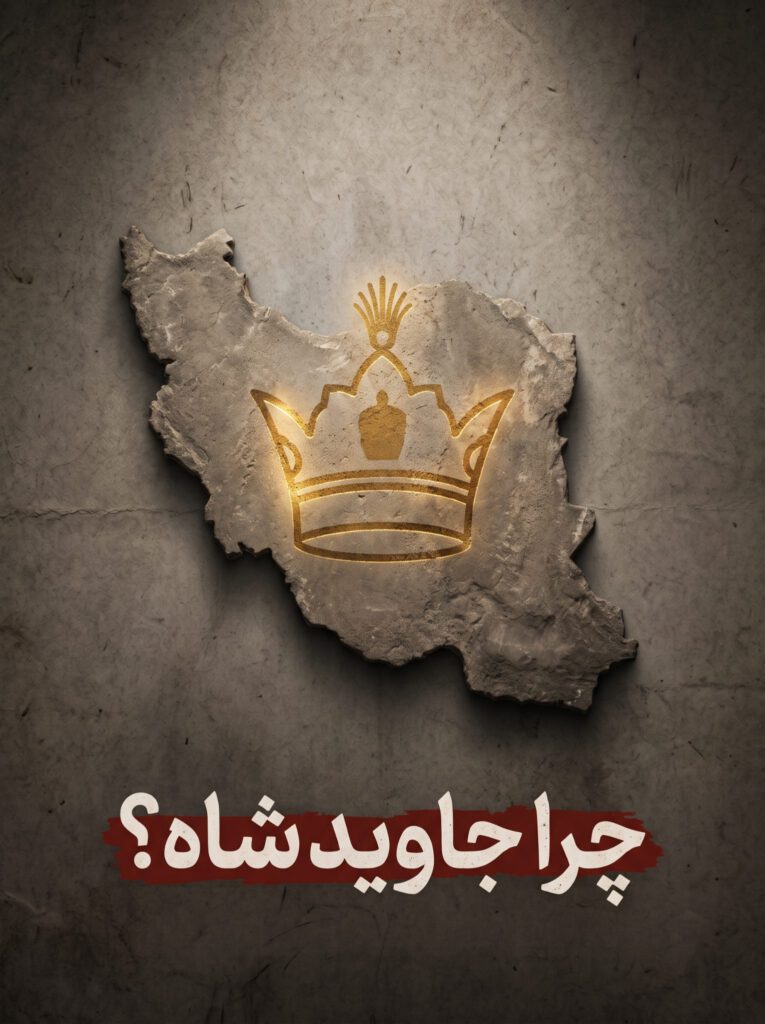
When the phenomenon of the return of Javed Shah's slogan to the public and protest atmosphere of Iran is addressed, many go for the simplest answers: "nostalgia of the fifties", "comparison of economic indicators" or "political stubbornness". But these are the most superficial layer of this phenomenon. In order to understand precisely why a generation that never lived during the kingdom, shouts its most radical demands in the form of one of the so-called traditional words of Iranian political history, one must go beyond the level of everyday politics and go to semiotics, historical psychology, and political sociology.
In the science of semiotics, words and slogans are not static; Rather, they are symbols whose meaning changes over time.
During the Pahlavi era, especially after the 1340s, Javid Shah's phrase was part of the official protocol of the government, which was repeated every morning in the queues of schools and barracks. At that time, Javed Shah was a discourse from "top to bottom" and a symbol of established order. At that time, this slogan had more of a symbolic and ceremonial aspect to maintain the status quo. Today, however, the story is completely different. In the past decades, the generation of 57, relying on revolutionary ideologies and idealisms, tried to build a utopia by destroying everything; A generation that, with excessive fascination for radical changes, tore Iran's historical bonds and dragged the society into the abyss of today's crises. But in recent decades, we have witnessed a surprising historical turn in which the vocabulary of the past power structure is used by the Iranian people as a weapon against the regime. In fact, the new generation, in a natural reaction to that chaotic and failed legacy, changed the same expression of Javed Shah, which was once a symbol of traditional ceremonies, into a They have turned the slogan 100% underground, protest and from the bottom up, and the same words that the generation of 57 tried to bury in history, have today become the most successful verbal weapon of their children and descendants.
Another question that is raised is why, among all the alternative options, the collective mentality of Iranians goes to the concept of "King" in moments of crisis? The answer should be sought in the collective unconscious and the history of Iranian political thought.
In the historical psyche of Iranians, the fear of chaos, disintegration and instability has always been more terrifying than the concentration of power. In the mythology and history of ancient Iran, the king is not an executive director, but the embodiment of the "Izadi Fur" and the pillar of the tent that protects Iran from collapsing against demonic forces and chaos.
The concept of Iranshahri and kingdom throughout the centuries, even after the fall of the Sassanids, has been the only thread maintaining the national identity and territorial integrity of Iranians. Therefore, when today's Iranian society finds itself faced with existential crises, international isolation and the risk of infrastructural collapse, the collective unconscious does not seek to return to an individual dictatorship, but seeks to summon that unifying archetype that has been a symbol of territorial integrity for three thousand years.
Now we have to answer the question of how the Zed generation, which is an individualist, structuralist and inherently liberal generation, gives a slogan that appears to belong to a traditional and hierarchical structure?
Social movements in the Middle East do not always act through coherent ideological actions, but use symbolic tools to conquer public spaces. For today's youth, the official discourse of sovereignty is based on the absolute negation of Pahlavi and the institution of the monarchy; In other words, the ideological identity of the current system is defined in "opposition to the king". As a result, the new generation realizes with radical intelligence that no word from the left, liberal or reformist literature challenges the foundation of legitimacy and ideological taboos of the ruling system as much as the phrase "Javid Shah". Therefore, Generation Z's use of this slogan is not a traditionalist act, but a postmodern deconstructive act: the use of the biggest taboo of sovereignty, to declare an absolute break without returning from the official discourse. Here, the king does not symbolize a return to the past, but a complete transition from the current state.
On the other hand, the 1357 revolution tried to divide Iran's history into two parts, Taghut and Islamic, and to cut the connection of the society with the modernization project of the Pahlavi era. The Pahlavi era was the period of the formation of modern institutions, the urban middle class, women's rights and the integration of Iran into the world community.
After four decades of testing revolutionary ideologies (from the Marxist left to political Islam and reformism), Iranian society has woken up from utopian illusions and is looking for a normal life, and it is not looking for its utopia in an imaginary future, but in a lost but tangible past; A past in which the natural path of progress and nation-state building was going on. From this point of view, the cry of "Javed Shah" is an attempt to ignore a four-decade bracket. It is an attempt to reconnect Iran's history to the modern nationalist nation-state that began with the constitution and was structured during the Pahlavi era.
Finally, reducing the slogan of "Javid Shah" to a simple nostalgia or classic "royalism" is an analytical error. Today, this slogan has become a super symbol that has four functions at the same time: a tool to break the biggest taboo of the established power, a psychological shelter against the fear of disintegration of the homeland, a symbol to reconnect with the censored national history, and a flag to return to the concept of a normal and national government.
Of course, when any symbol reaches such popularity and penetration in society, it inevitably faces the scourge of superficiality and surfing. There are not few people who, without having a correct understanding of the historical burden and philosophy hidden in this concept, come to this word simply for the sake of collective excitement, imitation or even to gain attention and gain momentary credit in the hot market of social networks. But even these demonstrative, imitative and sometimes opportunistic uses are a significant proof of the discourse victory of this symbol; Because it shows that "Javid Shah" has become the main stream of the street that even the seekers of visibility are forced to connect themselves to it. In addition to referring to the person of the king and the heritage of the past, this slogan is a radical statement about today and how to imagine tomorrow in the deep mentality of Iranian society.


