
Arash Tajdar
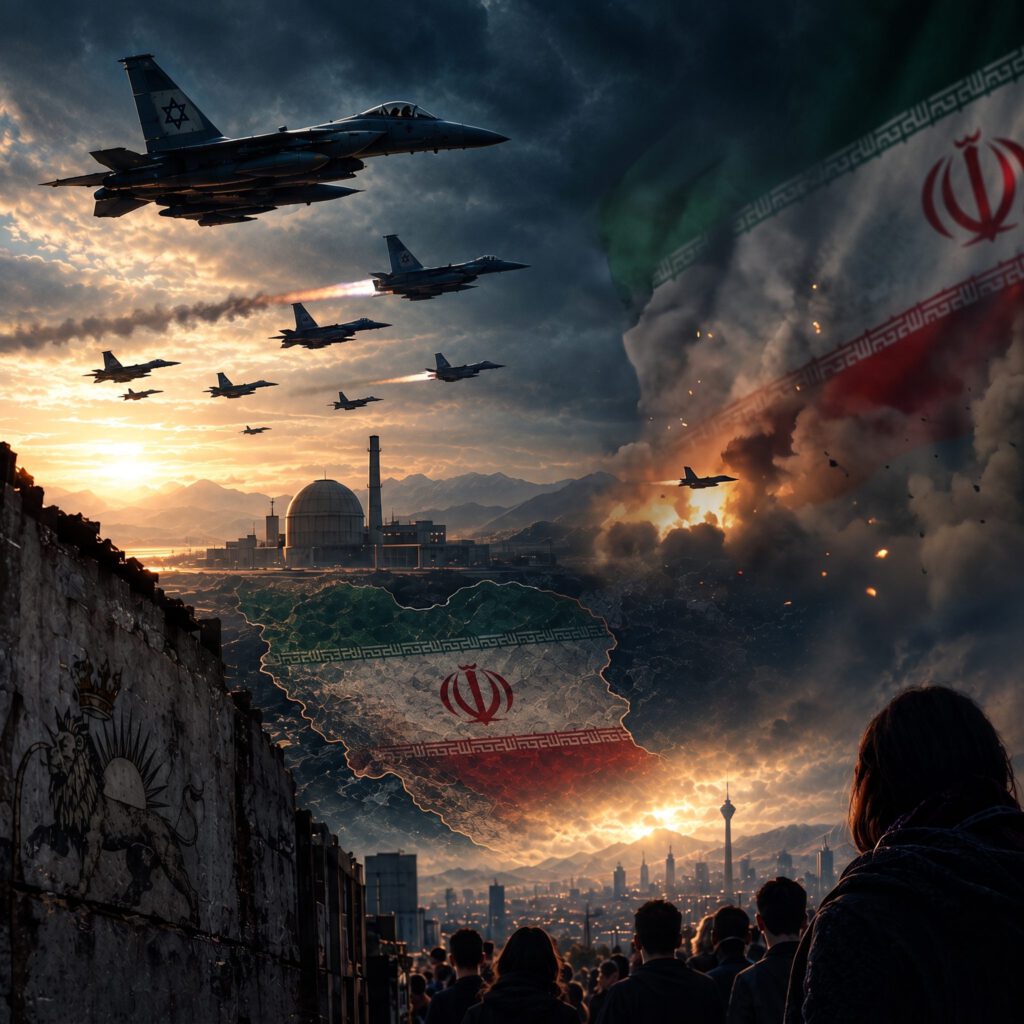
The flight of dozens of Israeli fighter jets near Iran's borders is more than a conventional military exercise, it is a precise political maneuver and a multifaceted psychological operation. This action, reported under the heading of "simulating an attack on the Islamic Republic's nuclear facilities", is in fact sending a clear message to three main audiences: the leaders of the Islamic Republic, the US government, and public opinion inside Israel.
These flights have designed a strategic trap for the regime. The regime of the Islamic Republic is now in a difficult dilemma between reaction and passivity, which both options bring heavy costs for it. If the Islamic Republic does not respond militarily to this action, the image that it invested decades to build as a deterrent power and axis of resistance will be severely distorted. This passivity means the tacit acceptance of Israel's aerial and operational superiority and being empty-handed for an effective response. Such a perception, both among its proxies in the region and in the hard-line internal body, can lead to the erosion of its authority and credibility.
On the other hand, any direct military response from the Islamic Republic is exactly what some figures in Israel might be looking for: an excuse to start a wider conflict. Considering the fragile state of Iran's economy, deep social dissatisfaction and the international isolation of the Islamic Republic, entering into a full-scale war can be an existential risk for the survival of the system. Therefore, the most likely scenario would be a controlled reaction through proxy forces; A solution that avoids crossing the threshold of war while trying to preserve reputation. But even this strategy is no longer effective as it was in the past, because with this maneuver, Israel has shown that it has adjusted its calculations based on a direct confrontation with Tehran, not marginal conflicts with affiliated groups.
Another addressee of this message is Washington. With this show of power, Israel is reminding its ally that it is ready to act alone if diplomacy is ineffective or America is not decisive about the nuclear program of the Islamic Republic. This action is a pressure lever on the US government to increase its support for a possible military solution. In fact, by doing this, Israel raises the cost of the West's procrastination or appeasement with the Islamic Republic and tries to keep the control of the timing and intensity of the crisis in its hands.
But the most important consequence of this growing tension is towards the people of Iran. This event once again shows how the adventurous and ideological policies of the Islamic Republic have taken Iran's national security and territorial integrity hostage. The nuclear program of the Islamic Republic, which has been pursued with enormous economic costs and devastating sanctions, has not only led to the country's power and security, but has also turned Iran into the scene of a dangerous confrontation in which the Iranian people will be the first victims. These flights, more than anything else, are a reminder of the bitter reality that as long as the Islamic Republic exists, the sky of the country will never be calm and the national resources are spent on projects that only result in the destruction of the country instead of the welfare of the people.


