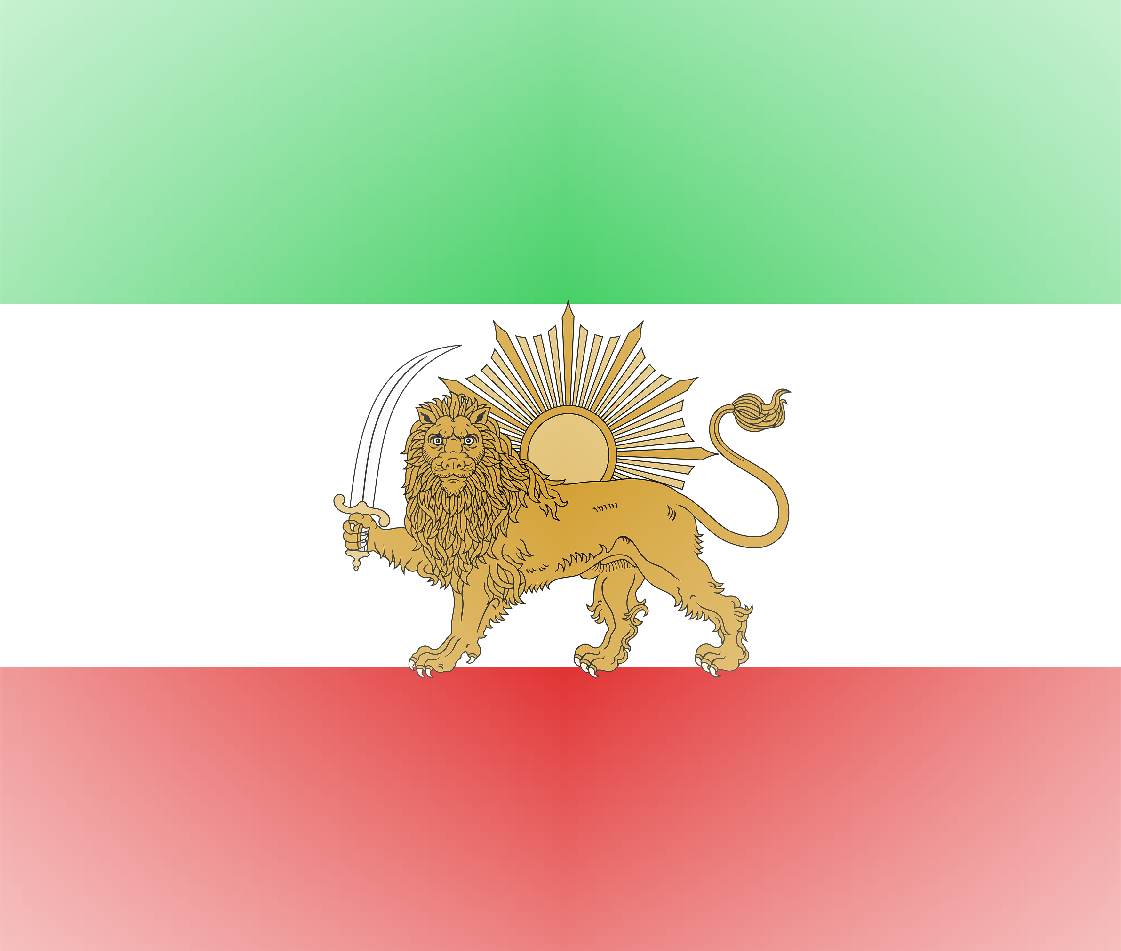
On 17 March 2026, the Lion and Sun Front of Iran sent an official letter to Ms. Neumann under the subject “Request for European Support for a Peaceful Democratic Transition in Iran.” The letter was drafted with the aim of drawing the attention and support of European institutions to the Iranian people’s demand for a transition from the Islamic Republic to a democratic, secular system based on the rule of law.
In this letter, the Lion and Sun Front of Iran introduced itself as a coalition of pro-democracy political groups, civil society organizations, and Iranian activists both inside the country and across the diaspora, and emphasized that the mission of this coalition is to help advance a peaceful political transition in Iran on the basis of human rights, the rule of law, and national sovereignty. It was also explicitly stated that these efforts are being pursued within the framework of international law, particularly with reference to Article 1 of the International Covenant on Civil and Political Rights, namely the right of peoples to self-determination.
In the main body of the letter, European governments and parliaments are urged to move beyond past policies that have effectively contributed to the continued survival of the Islamic Republic regime, and instead to provide meaningful and practical support to the people of Iran and to the forces advocating democratic transition. In this context, the letter specifically calls for the initiation of official dialogue and engagement with Prince Reza Pahlavi. It emphasizes that Prince Reza Pahlavi is recognized by millions of Iranians, both inside and outside the country, as the national leader of Iran’s democratic movement and as a central figure capable of guiding the transitional period. It is further noted that recognizing his role and establishing a structured dialogue with him could strengthen international efforts to support a free, stable, and democratic future for Iran.
The letter also addresses the grave and dangerous regional situation, attributing a significant part of it to the Islamic Republic’s destabilizing policies, its support for militant networks, and its continued pursuit of nuclear capabilities. It further states that the Islamic Republic regime has sought to exploit the crisis for political leverage through military and missile actions and by escalating regional tensions. The Front warns that if the Islamic Republic once again emerges from the current crisis without real accountability, the same pattern of the past four decades—domestic repression, regional destabilization, and threats to international security—will continue.
In conclusion, several specific requests are addressed to the European side: support for the Iranian people’s right to self-determination and democratic transition; the adoption of practical measures against the networks, activities, and financial resources of the Islamic Revolutionary Guard Corps in Europe; the summoning of ambassadors of the Islamic Republic and the examination of the possibility of suspending or closing the regime’s diplomatic missions in Europe; and support for the Iranian people’s access to a free and open internet and to the free flow of information. The letter concludes by emphasizing the Lion and Sun Front of Iran’s readiness for further dialogue with Ms. Neumann’s office and expressing the hope that this correspondence may serve as the beginning of a meaningful dialogue in support of the people of Iran.
In summary, this letter can be regarded as a targeted political and diplomatic initiative aimed at internationalizing the demand for official support for the people of Iran and at consolidating Prince Reza Pahlavi’s position as the national leader of Iran’s revolution in Europe’s political engagement.